

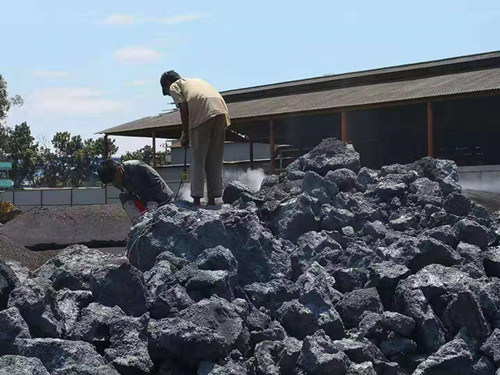
Iron Ore Sinter
A sinter plant typically consists of a series of large machines where the ore is mixed with other materials, ignited, and heated to produce the sinter. It is one of the first steps in the steel production process.
Sinter is crucial in modern steelmaking because it ensures that iron ore fines are used effectively in blast furnaces, contributing to the overall productivity and efficiency of the steel production process.
Sintering Process:
Raw Materials: Fine iron ore, fluxes (e.g., limestone or dolomite), and fuel (e.g., coke breeze) are mixed.
Agglomeration: This mixture is placed on a sinter machine, a large moving grate where it is ignited. The heat causes the ore particles to fuse together into larger chunks.
Cooling: After sintering, the sintered ore is cooled and then broken into smaller pieces, ready for use in the blast furnace.
Advantages:


Improved Productivity: Sintering helps increase the productivity of blast furnaces, making the process more efficient.
Use of Fine Ore: Iron ore fines that would otherwise be wasted can be used effectively in the sintering process.
Cost-Effective: By using iron ore fines and other locally available materials, sintering can reduce the cost of production.
Environmental Impact: Sintering can generate dust and emissions, but modern sintering plants often have measures like gas cleaning and dust suppression systems to minimize environmental impact.
Quality of Sinter: The quality of sinter depends on factors like the ore's chemical composition, the sintering process itself, and the mix of fluxing agents. High-quality sinter has good mechanical strength, high porosity, and a consistent size, making it ideal for the blast furnace.
In summary, iron ore sinter is a crucial product in steelmaking, produced by sintering fine iron ore to form larger, more durable particles. It plays a vital role in improving the efficiency of the blast furnace process.
Key Benefits of Sponge Iron (DRI):
- Cleaner Production: The DRI process generally produces fewer pollutants and CO2 emissions compared to the traditional blast furnace method, making it more environmentally friendly.
- Energy Efficiency: The process of using natural gas as a reducing agent can be more energy-efficient, particularly in countries with cheap and abundant natural gas supplies.
- High-Quality Iron: DRI is high in iron content and is used to make high-quality steel